

- Advisory
- Solutions
- Customers
- About Zimply
- Resources
- Contact
 EN
EN- Book a Demo
27 August, 2024

As artificial intelligence (AI) continues to transform the workplace, its role alongside human workers is becoming a focal point of discussion. AI brings significant benefits, including increased efficiency, cost savings, and improved data handling. However, it also brings challenges and prompts critical questions, such as: could AI ultimately replace jobs altogether?
This article delves into the comparison between AI and human workers, exploring their respective strengths and weaknesses, how they can complement each other in the workforce, and strategies for leveraging both to optimize job performance in the future.
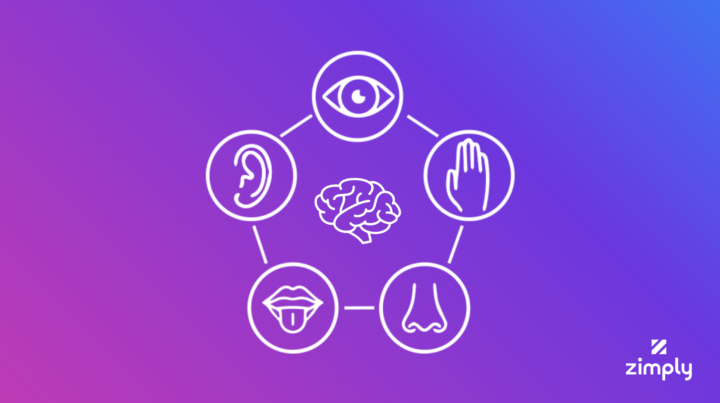
Human Intelligence is defined by a combination of cognitive abilities such as reasoning, creativity, emotional understanding, problem-solving, and learning. It involves the capacity to adapt to new situations, think abstractly, and apply knowledge in various contexts. Humans use their senses—like sight, hearing, and touch—along with experience and emotions, to make informed decisions and navigate complex environments.
Artificial Intelligence, on the other hand, gains its "intelligence" from a collection of advanced technologies. For instance:
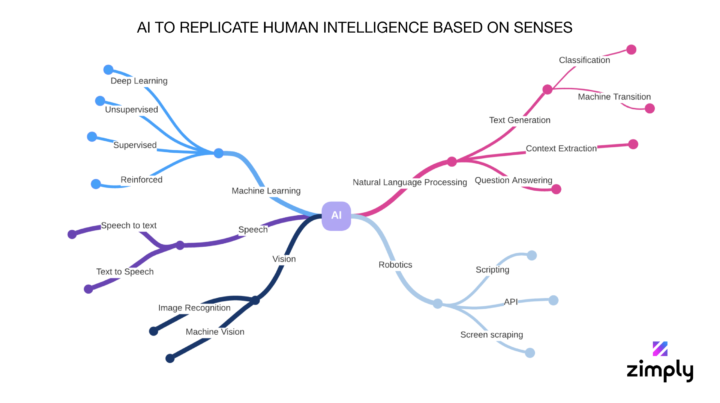
While human intelligence is driven by biology and experiences, AI's intelligence is a result of programmed algorithms, data processing, and sensory technologies. Both forms of intelligence are powerful in their own right, but they operate differently based on their unique foundations.
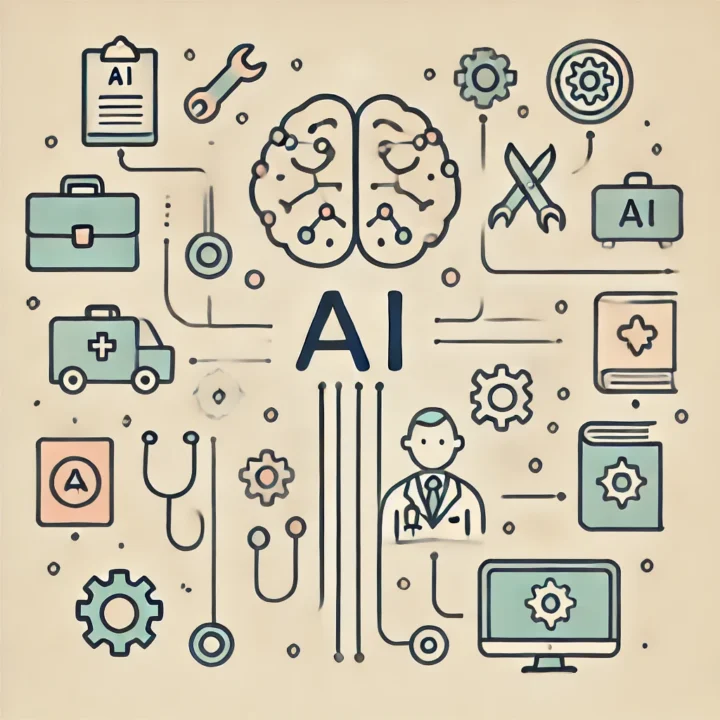
AI is impacting various industries, but the extent and nature of this impact vary widely. While some sectors, particularly those with manual, repetitive tasks, see significant automation, most jobs aren't being replaced entirely. Instead, AI tends to automate specific processes, especially those that are routine and non-creative, freeing up human workers to focus on tasks that require human intelligence, creativity, and emotional understanding. These types of AI systems are called AI Assistans.
In many cases, AI's role is to enhance productivity by handling repetitive or data-intensive tasks, allowing workers to shift their attention to more complex and strategic responsibilities. This partial automation often leads to the creation of new roles, such as managing AI Assistans overseeing automated processes, or working with operations of AI assistants. These new jobs involve governing AI implementations and ensuring they align with human goals and ethical standards.
Overall, while AI is changing the nature of work in many industries, it rarely results in complete job replacement. Instead, it transforms roles, creating opportunities for workers to engage in higher-value tasks and for new job categories to emerge.
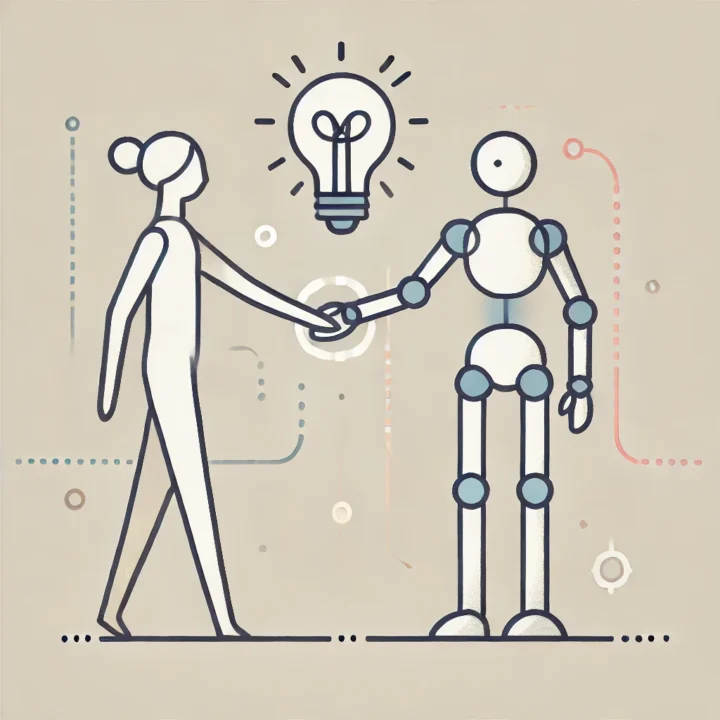
As AI continues to integrate into various industries, the focus is shifting from AI as a replacement for human workers to AI as a collaborator. Human-AI collaboration is becoming increasingly important, where AI handles specific, often repetitive, processes, allowing humans to concentrate on tasks that require creativity, complex problem-solving, and emotional intelligence.
In this collaborative model, AI acts as an enhancer of human capabilities rather than a replacement. For example, in healthcare, AI can analyze large datasets to identify patterns or predict outcomes, while doctors and nurses apply their expertise to make informed decisions and provide patient care. In finance, AI can manage data-heavy tasks like fraud detection, leaving human professionals to focus on strategic planning and client relationships.
This collaboration not only improves efficiency but also leads to the creation of new job roles that revolve around managing and overseeing AI Assistants. Jobs like AI system governance, AI-assisted roles, and positions focused on ethical oversight of AI are emerging as critical components of modern workplaces. These roles ensure that AI Assistants operate smoothly, align with human values, and adapt to changing needs.
Human-AI collaboration exemplifies how the future of work is evolving—not toward the replacement of human intelligence, but toward a partnership where AI enhances human strengths. This synergy allows industries to innovate and adapt, ensuring that while some job processes may be automated, the core of human creativity and decision-making remains indispensable.
As AI continues to evolve and integrate into various industries, preparing for the future workforce requires a thoughtful approach that balances the strengths of both AI and human workers. AI systems, often referred to as AI Assistants, are becoming increasingly common, automating routine tasks and enhancing productivity across multiple sectors. However, rather than fully replacing human jobs, AI is transforming roles, creating new opportunities for workers to engage in higher-value, creative, and strategic tasks.
The future of work will likely see a growing emphasis on human-AI collaboration, where AI handles data-intensive, repetitive processes, and humans focus on complex problem-solving, ethical decision-making, and tasks requiring emotional intelligence. To thrive in this evolving landscape, it’s essential to invest in reskilling and upskilling the workforce, ensuring that workers are equipped to oversee, manage, and collaborate with AI Assistants.
In this new era, AI Assistants will not replace human intelligence but will serve as powerful tools that enhance human capabilities, enabling innovation and adaptation in an ever-changing job market. By embracing the synergy between AI and human workers, we can build a future workforce that leverages the best of both worlds.
P.S. This article is a collaboration between human and AI. DS
Increase productivity
Less errors
Reduce costs
Save time
Book a meeting, digital or physical and we will tell you more
